Cell Biology

Stromal Cells

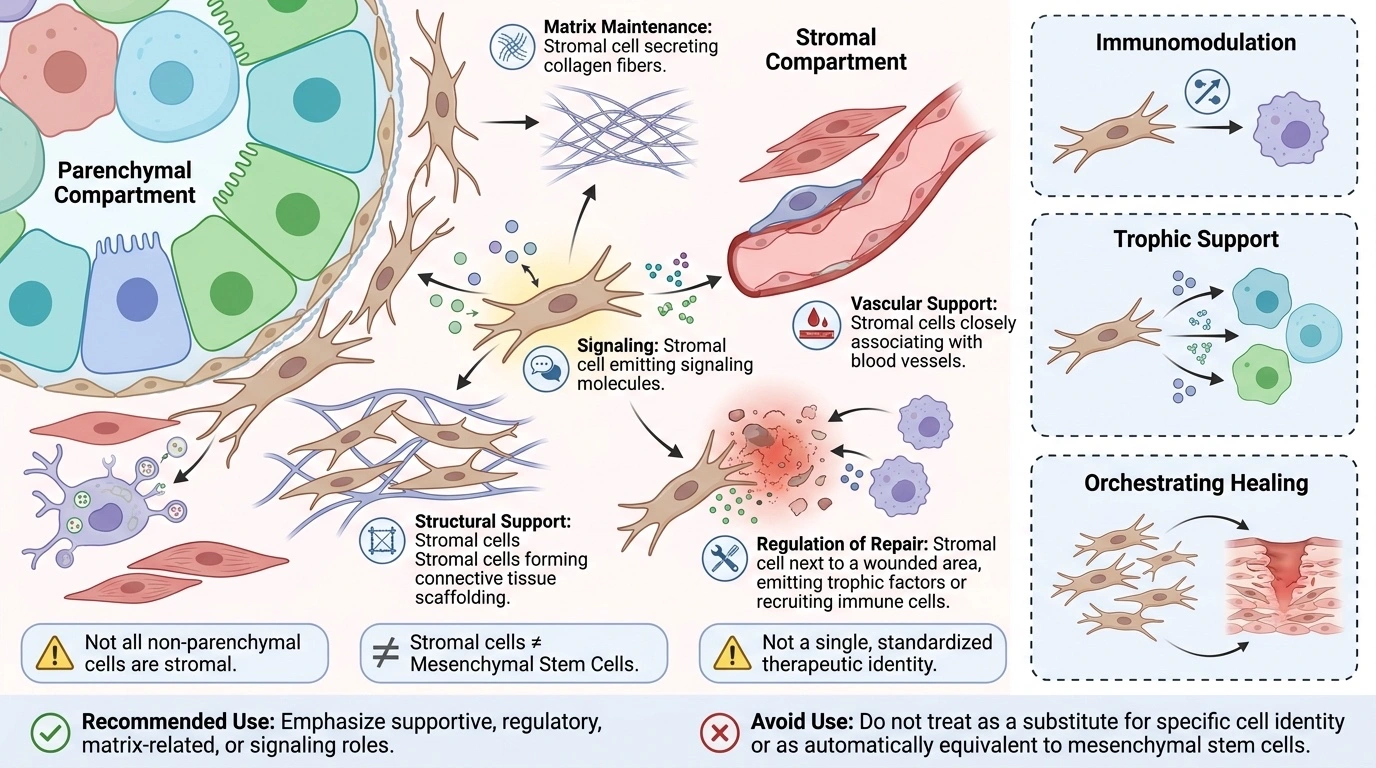
Stromal cells are the supportive cells of a tissue microenvironment that contribute to structure, matrix maintenance, signaling, vascular support, and regulation of repair responses.

Stromal cells are the supportive cells of a tissue microenvironment that contribute to structure, matrix maintenance, signaling, vascular support, and regulation of repair responses. In regenerative and reparative therapies, the term is often important because therapeutic benefit may arise less from direct tissue replacement and more from stromal signaling, trophic support, immunomodulation, or orchestration of local healing processes. The exact meaning may vary by tissue and specialty, so it is useful to specify whether stromal is being used anatomically, functionally, or as part of a product designation. It is not synonymous with all non-parenchymal cells, and it should not be treated as automatically equivalent to mesenchymal stem cells or to a single standardized therapeutic identity.

Recommended Use:

Use when emphasizing the supportive, regulatory, matrix-related, or signaling role of cells within a tissue microenvironment.

Avoid Use:

Avoid as a substitute for specific cell identity when a narrower cellular classification is available or necessary.

See Also:

Mesenchymal Cells, Parenchymal Cells, Cell Therapy.

Browse More Terms

Rejuvenation

Clinical Observation

Regenerative

Treatment Philosophy

Optimization

Treatment Philosophy

Join Us On The Path Forward.

The field advances in the exchange between practitioners who take the work seriously. Membership is how you stay in that exchange all year — expert education, the growing on-demand library, The ARTS Commons, and the collaborative work of the Tissue Response Compass™, plus member pricing on courses, hands-on training, and gatherings.