Biological Process

Mesenchymal-Epidermal Transition

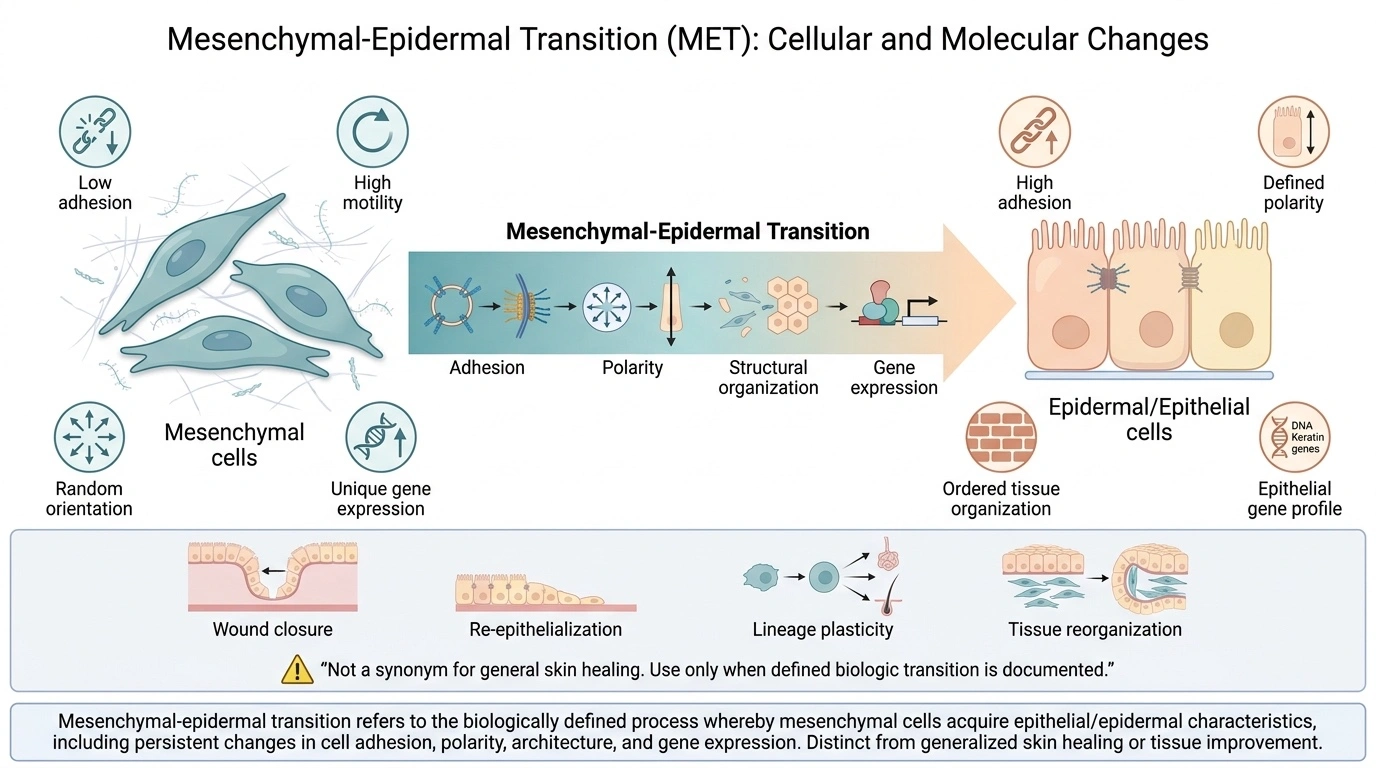
In interdisciplinary terminology, mesenchymal-epidermal transition refers to a process in which cells with mesenchymal characteristics acquire more epithelial or epidermal features, including changes in adhesion, polarity, structural organization, and gene-expression profile.

In interdisciplinary terminology, mesenchymal-epidermal transition refers to a process in which cells with mesenchymal characteristics acquire more epithelial or epidermal features, including changes in adhesion, polarity, structural organization, and gene-expression profile. Although the better-known directional phrase in biology is often epithelial-to-mesenchymal transition, the reverse concept may be invoked in discussions of wound closure, re-epithelialization, lineage plasticity, or tissue reorganization. In regenerative and reparative settings, the term should be used carefully because its meaning may differ depending on whether the discussion is developmental, mechanistic, experimental, or metaphorical. It is not a casual synonym for skin healing in general, and it should not be used without clarifying whether a specific biologic transition is actually intended.

Recommended Use:

Use only when referring to a defined biologic or experimental transition toward epithelial or epidermal characteristics.

Avoid Use:

Avoid as a broad label for re-epithelialization, skin recovery, or generalized wound improvement unless that specific transition is documented or clearly intended.

Browse More Terms

Rejuvenation

Clinical Observation

Regenerative

Treatment Philosophy

Optimization

Treatment Philosophy

Join Us On The Path Forward.

The field advances in the exchange between practitioners who take the work seriously. Membership is how you stay in that exchange all year — expert education, the growing on-demand library, The ARTS Commons, and the collaborative work of the Tissue Response Compass™, plus member pricing on courses, hands-on training, and gatherings.