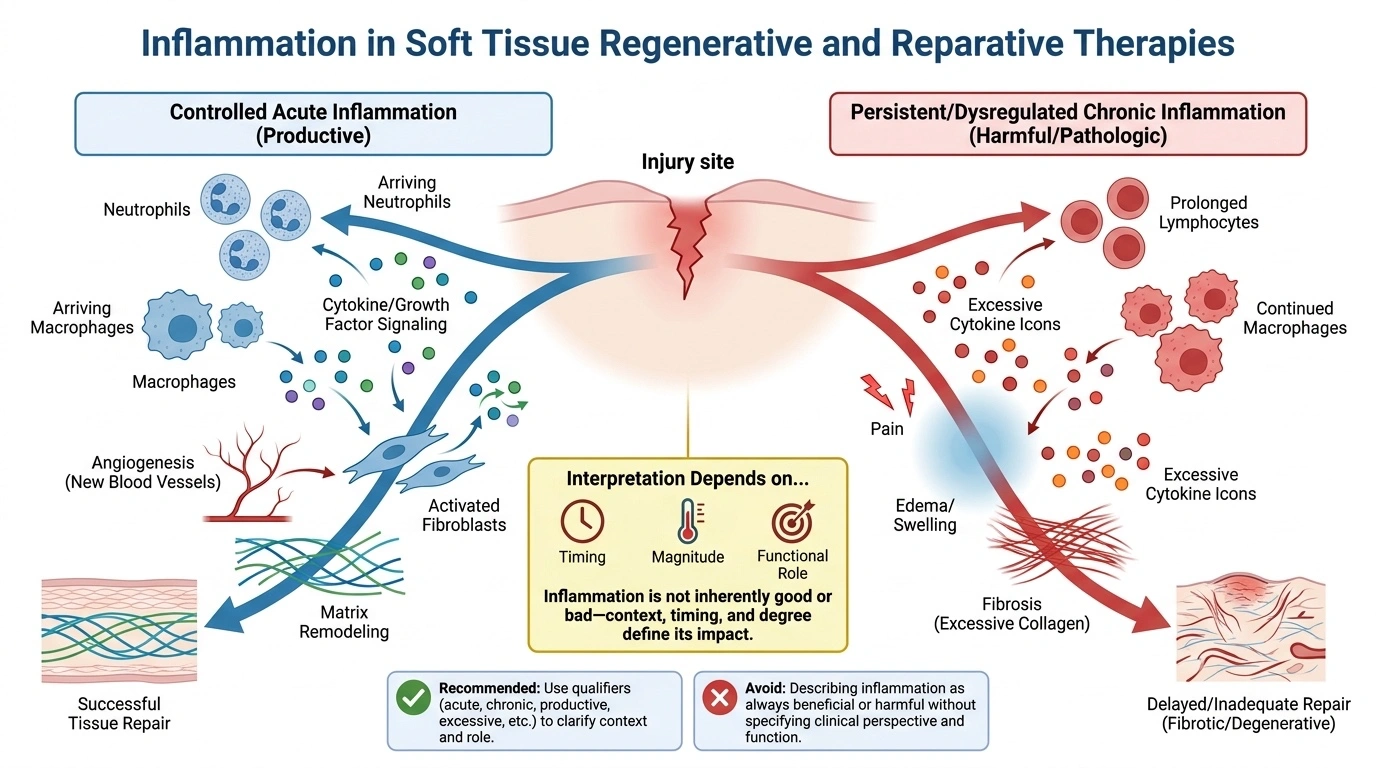
In soft tissue cell regenerative and reparative therapies, inflammation refers to the biologic response to injury, intervention, irritation, or tissue stress that helps coordinate defense, cleanup, and repair. Its meaning varies substantially by specialty, product category, marketing context, and clinical perspective. Mechanistically, controlled acute inflammation may be viewed as part of a productive reparative cascade that supports cell signaling, fibroblast recruitment, angiogenesis, and matrix remodeling, whereas persistent, dysregulated, or excessive inflammation may be associated with pain, edema, fibrosis, delayed recovery, or poor longitudinal tissue quality. For this reason, the term may be described positively, neutrally, or negatively depending on whether the speaker is emphasizing biologic necessity, observed tissue reaction, risk management, or promotional positioning. It is not inherently pathologic in every setting, and it should not be discussed as automatically beneficial or automatically harmful without clarifying its timing, magnitude, and functional role in tissue response.
Recommended Use:
Avoid Use:
See Also: